






























Mitigating Global Workforce Risk: The Strategic Role of International Hospitals in Fulfilling Corporate Duty of Care
- Written by: iPMI Global
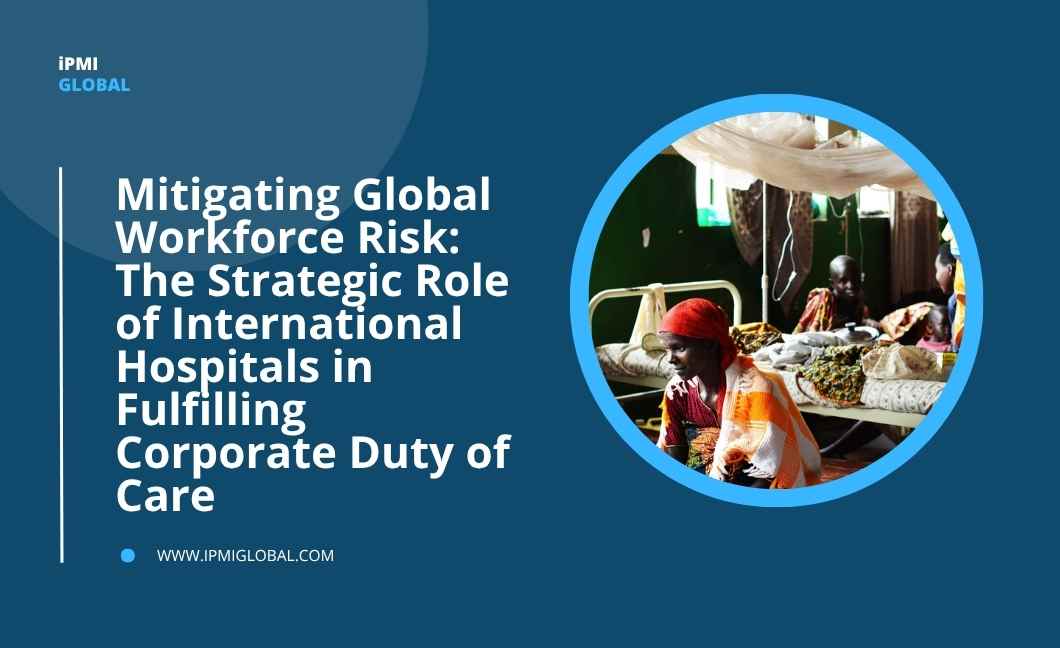
In this iPMI Global Expatriate Life article, we focus on the growing strategic importance of Western-style international hospitals for the highly mobile populations of expatriates and global travelers. It argues that these facilities, characterized by evidence-based protocols, internationally credentialed staff, and transparent administration, are crucial for mitigating clinical and non-clinical risks abroad. For insurers and global employers, a network of such hospitals provides continuity of care, facilitates claims adjudication, and ensures brand assurance, especially given the rising average and extreme costs of overseas medical claims. The text concludes that as international mobility and the related medical tourism market continue to grow, the seamless integration of these high-standard hospitals, insurance products, and mobility services is essential for managing global health risk.
-
The New Landscape of Global Mobility and Healthcare Risk
In today's borderless professional landscape, the expansion of overseas deployments has introduced a new set of complex healthcare challenges for global mobility managers and employers. This reality directly impacts corporate duty of care, threatens operational continuity, and carries significant implications for brand assurance. The core challenge for employers is that the healthcare needs of expatriates and international travellers now span a vast array of geographies, regulatory frameworks, and cultural contexts. This has created a new ecosystem of risk that must be strategically managed. This complex environment gives rise to specific, material risks, particularly when healthcare standards and administrative processes are inconsistent across borders.
-
Deconstructing "Provider Risk": The Core Challenge for Overseas Deployments
From a corporate employer's perspective, "provider risk" is the strategic uncertainty and potential for negative outcomes when an employee must rely on a local hospital that fails to meet expected standards. This risk manifests as the potential for poor clinical outcomes, the likelihood that claims will be harder to adjudicate, and the increased probability that costly medical evacuations will become necessary. This is not merely an inconvenience; it represents a significant gap in an organization's duty of care and a direct threat to the wellbeing of its personnel.
The specific factors that constitute provider risk include:
Disruption in Care Models: When employees encounter unfamiliar healthcare models, the resulting language barriers and differing medical standards create profound risk. This disruption translates directly to the potential for clinical errors, significant liability exposure for the employer, and an erosion of employee confidence in the corporate support system.
Administrative Opacity: Unfamiliar administrative protocols, coupled with non-transparent billing and insurance interfacing, create significant friction. For the employer and its insurers, this opacity leads to claim adjudication delays and unpredictable costs. For the employee, it creates a stressful and frustrating experience during a time of medical vulnerability.
Inconsistent Quality Frameworks: Many local healthcare facilities lack familiar accreditation frameworks, such as those from Joint Commission International (JCI), which signify a commitment to quality and patient safety. This absence of recognized standards makes it impossible for employers to properly vet providers and guarantee a consistent level of care for their global workforce.
These risks collectively threaten not only clinical outcomes for the employee but also create significant administrative friction and potential liability for the employer. Managing this provider risk is therefore a critical component of any global mobility strategy.
-
The Strategic Solution: How Western-Style Hospitals Mitigate Corporate Risk
Western-style international hospitals are an essential component of a global health-risk mitigation ecosystem, not merely a convenience for mobile populations. These institutions serve as the primary solution to "provider risk" by directly neutralizing the threats of clinical disruption, administrative opacity, and inconsistent quality detailed above. They create a predictable, high-quality healthcare environment that offers three core strategic advantages.
Ensuring Continuity of Care and Reducing Clinical Risk By offering services delivered by multilingual staff, these hospitals immediately neutralize one of the most significant barriers to effective care. They operate within familiar quality accreditation frameworks like JCI, which provides external validation of their clinical and safety standards. Furthermore, their transparent billing systems and experience interfacing with international insurers streamline the administrative process, while familiar care pathways align with employee expectations, collectively reducing the likelihood of adverse events and mitigating corporate liability.
Guaranteeing Access to High-Stakes Specialized Care In a medical emergency or when a serious condition arises, the margin for error narrows dramatically. Western-style hospitals are uniquely equipped for these high-stakes situations. They feature established international patient desks dedicated to managing the complex needs of foreign nationals, and their proven capabilities in multistakeholder coordination—liaising seamlessly with insurance providers, medical transportation services, and even diplomatic channels—are a key differentiator that ensures comprehensive support during critical events.
Strengthening Employer and Insurer Confidence For corporate and insurance stakeholders, a network of accredited international hospitals significantly reduces uncertainty. Knowing that employees have access to facilities with vetted standards, transparent processes, and integrated international services lowers operational friction and improves the quality of service delivered to the employee. Critically, this mitigates the need for costly and disruptive medical evacuations, which are often a last resort when local provider risk is deemed too high.
The strategic value of these institutions is not merely theoretical; it is powerfully reinforced by the financial and market realities of international medical events.
-
Quantifying the Stakes: The Financial and Market Realities of International Medical Events
Understanding the financial exposure associated with overseas medical incidents is a strategic imperative. Market and claims data provide clear evidence that the risks involved are material and growing, underscoring the need for reliable healthcare infrastructure for mobile populations. The increasing global demand for high-quality, cross-border care is reflected in the strong growth forecasts for key market segments.
|
Market Segment |
2024/2025 Value |
Forecasted Value & CAGR |
|
Global Medical Tourism |
US $144.5 Billion (2024) |
US $704.8 Billion by 2033 (~19.1% CAGR) |
|
International Healthcare |
US $13.2 Billion (2025) |
US $25.3 Billion by 2033 (~13.3% CAGR) |
Beyond market growth, travel insurance claims data provides concrete evidence of the cost of overseas medical events. An analysis of the UK market reveals a stark picture:
Overall Payouts: In 2024, UK insurers paid out £472 million across more than 500,000 travel insurance claims, demonstrating the high frequency of incidents.
Significance of Medical Claims: Medical expenses constituted 34% of all claim costs, a rising proportion from 29% in 2023. This trend confirms that medical events are not only frequent but are becoming an increasingly dominant component of total overseas risk exposure for corporations.
Average vs. Extreme Costs: The average emergency medical claim was approximately £1,528 in one 2024 analysis, while other data from 2023 placed it at £1,724. However, the outlier risk is immense, with one case in 2024 exceeding £1 million. The vast delta between the average claim and the multi-million-pound outlier underscores a critical strategic reality: corporate risk models must be built to withstand low-probability, high-impact events, not just the predictable average.
These figures prove that medical risks for travellers and expatriates are real, material, and potentially extreme. The high-cost exposure makes access to reliable international hospitals and robust insurance a non-negotiable strategic imperative for any organization with a global workforce.
-
A Strategic Framework for Implementation: Integrating Healthcare into Global Mobility Policy
Mitigating global workforce health risk requires more than just a standard insurance policy; it demands a deliberate strategy that integrates healthcare provider selection, insurance policy design, and fundamental duty-of-care principles. The following five pillars provide an actionable framework for global mobility managers and corporate employers to build a resilient and effective program.
Mandate Rigorous Provider Credentialing and Network Design Assess international hospitals based on their credentials, not just their location. Your mandate must be to prioritize facilities with recognized international accreditation, proven patient safety standards, and robust capabilities for coordinating care for international patients. Ensure the network has seamless interfaces with insurance partners, including protocols for direct billing, to eliminate administrative burdens on employees.
Design Insurance Policies That Reflect Real-World Risk Shift from inadequate "local equivalent" policies to comprehensive plans that explicitly cover emergency evacuation, repatriation, and care for chronic conditions at accredited international facilities. Insurance policies limited to local public hospital care are fundamentally misaligned with an employer's duty of care and the financial reality of high-cost overseas medical claims.
Leverage Strategic Alliances for Cost Control and Better Outcomes Embed a preferred-provider network of accredited international hospitals directly into corporate mobility policy. These strategic alliances between employers, insurers, and hospital groups improve employee outcomes by directing them to vetted facilities. This approach also lowers claim leakage and creates opportunities for better cost management through established partnerships.
Embed Healthcare Access into Duty of Care and Brand Assurance Forge a direct link between a curated network of Western-style hospitals and the fulfilment of your corporate duty of care. Providing clear, reliable access to high-quality care reduces operational disruptions caused by medical events and tangibly enhances staff wellbeing. This commitment serves as a powerful tool for employee retention and reinforces the employer's brand as one that prioritizes its people.
Demand Data and Transparency to Drive Value Transition from a location-based approach—finding any hospital—to a value-based one: finding the right hospital. This requires demanding greater transparency from both hospital and insurance partners. Base network decisions on outcome data, cost transparency, and patient satisfaction metrics to ensure the healthcare program delivers demonstrable value and the highest standard of care.
By implementing these pillars, organizations can move from a reactive to a proactive stance on global workforce health, transforming a key risk into a strategic asset.
-
Conclusion: From Risk Mitigation to Strategic Advantage
Strategically integrating Western-style international hospitals into a global mobility framework is an essential business function for managing financial exposure, reputational risk, and operational continuity. For leading organizations, this is not a niche concern but a growth frontier with material strategic significance. As the global competition for talent intensifies, deep partnerships among hospitals, insurers, and corporate employers are becoming imperative to deliver the seamless, high-quality global care experiences that top professionals expect. For today's global employer, a proactive approach to healthcare risk management is no longer just a defensive necessity—it is a powerful competitive differentiator in attracting, supporting, and retaining a world-class workforce.