

AI in International Private Medical Insurance: A Strategic Briefing for Executive Leadership
- Written by: iPMI Global
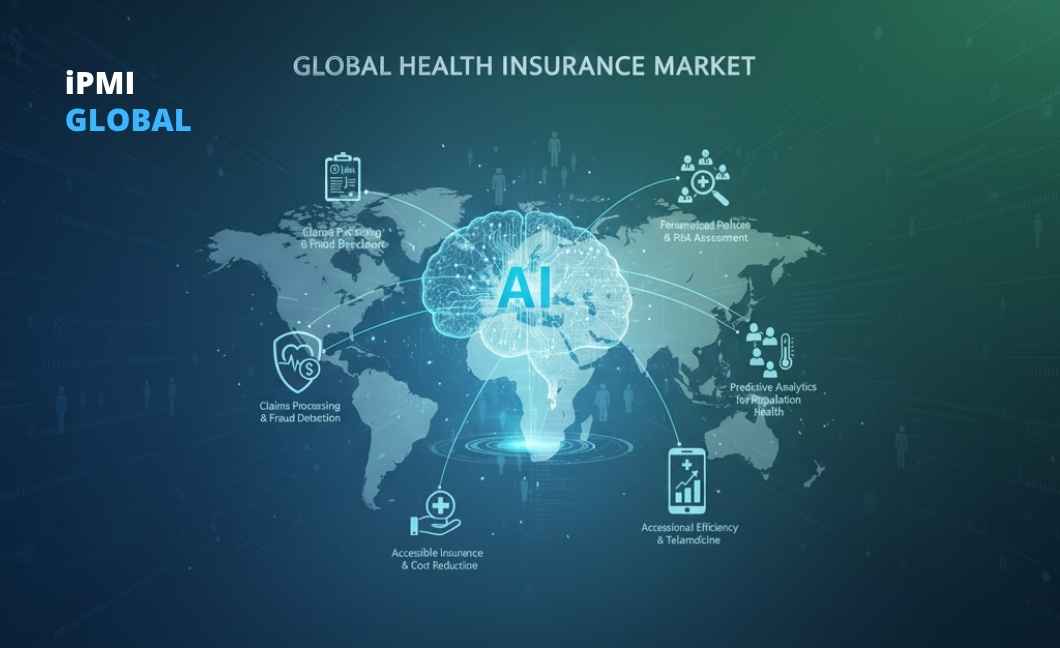
The adoption of Artificial Intelligence (AI) within the International Private Medical Insurance (IPMI) sector is not a mere technological upgrade; it is a fundamental strategic imperative for competing in a uniquely complex global market. Insurers who view AI as a simple efficiency tool risk being outmaneuvered by competitors who leverage it to reshape core functions, from risk selection to member engagement. This briefing provides a clear-eyed analysis of the tangible value of AI across the IPMI value chain, outlines the critical implications for workforce structure, and presents a pragmatic roadmap for implementation and risk management.
1. The Strategic Imperative: Why AI Matters to International Private Medical Insurance
The distinct characteristics of the International Private Medical Insurance sector—its multi-jurisdictional regulation, varied provider networks, high-value claims, expatriate portability, and specialized product designs like medical evacuation and repatriation—make it exceptionally well-suited for AI-driven transformation. This environment is both operationally costly and rich with data, creating ideal conditions for AI to deliver measurable value. Leading reinsurers like Munich Re have publicly affirmed this view, highlighting AI's potential to fundamentally reshape health underwriting and claims workflows.
The primary business drivers compelling IPMI leaders to adopt AI include:
- Operational Efficiency AI automates the costly and time-consuming manual tasks inherent in the IPMI workflow. By handling routine data entry, document processing, and simple adjudications, AI frees up skilled personnel to focus on higher-value activities, directly impacting operational expenditure and scalability.
- Enhanced Risk Selection In a technically complex market, AI models improve the speed and accuracy of underwriting and pricing. By ingesting diverse data sources—from medical declarations to country-specific health indicators—AI provides a more nuanced view of risk, enabling faster, more consistent, and more profitable decision-making.
- Proactive Claims Management AI is a powerful tool for controlling the high-value claims that define the IPMI market. Its ability to spot anomalous claims and detect provider overbilling helps contain costs, while its analytical capabilities can optimize provider networks to ensure members receive high-quality, cost-effective care.
- Personalized Member Journeys For expatriate members navigating unfamiliar healthcare systems, superior service is a key differentiator. AI enables insurers to deliver personalized digital engagement, from automated query resolution to intelligent care routing, significantly improving the member experience and fostering loyalty.
These drivers illustrate why AI is a strategic necessity. The focus now shifts from the "why" to the "how"—the specific, high-impact applications that deliver this value.
2. High-Impact AI Applications Across the International Private Medical Insurance Value Chain
AI's strategic value is not an abstract concept; it is delivered through concrete applications that can be integrated across the entire insurance value chain. From initial distribution to ongoing member services, targeted AI solutions are already transforming both operational metrics and the roles of the personnel who manage them. This section breaks down the most impactful use cases.
International Private Medical Insurance Distribution & Broker Operations
- Automated Quoting & Scope-Matching: AI-powered intake forms can extract data from applicant responses, medical histories, and even CVs to pre-populate quotes and match them to suitable products, dramatically speeding up placement for standard expatriate risks.
- Predictive Client Segmentation: Machine learning models can analyze portfolios to identify groups with a high risk of churn or high future costs, enabling brokers to engage proactively with targeted retention or wellness strategies.
- Document & KYC Automation: By leveraging Natural Language Processing (NLP) and Optical Character Recognition (OCR), AI reduces the manual burden of processing paperwork for Know Your Customer (KYC) and Anti-Money Laundering (AML) compliance checks.
- Impact on Broker Roles: These tools will automate a significant portion of routine administrative and quoting tasks. This shift reinforces the value of senior brokers, whose expertise in complex benefit design, cross-border advisory, and strategic relationship management remains an essential human function.
International Private Medical Insurance Underwriting & Pricing
- Accelerated Risk Assessment: AI models triage applications by ingesting and analyzing medical declarations, claims history, wearable/connected-health data, and external data sources. This allows cases to be quickly categorized as standard, declined, or requiring specialist human review.
- Automated Decisioning: For low-risk, standard applications, automated underwriting engines can assess the case and issue a policy instantly, reducing turnaround times from days to minutes.
- Dynamic Portfolio Analytics: AI continuously monitors morbidity trends and provider cost inflation across different countries, enabling insurers to update pricing dynamically and identify early signs of adverse selection in the portfolio.
- Impact on Underwriting Roles: The automation of data intake and basic risk scoring will primarily affect junior underwriting and processing roles. The need for senior underwriters will remain critical for handling complex medical judgments, interpreting ambiguous cases, and making final decisions on high-value policies.
International Private Medical Insurance Claims & Fraud Detection
- Automated Claims Adjudication: Simple, low-value claims (e.g., routine pharmacy fills) can be automatically triaged and paid when they meet predefined rules and machine learning confidence thresholds, increasing processing speed and reducing administrative costs.
- Advanced Fraud & Overbilling Detection: Using sophisticated pattern detection, AI models can identify outlier provider billing, duplicate claims, and suspicious provider-patient relationships that are often missed by manual reviews. Vendors like Shift Technology provide specialized platforms for this purpose.
- Provider Network Optimization: By analyzing claims data for usage patterns and patient outcomes, AI can help steer members toward high-quality, cost-effective providers, simultaneously improving care and containing costs.
- Impact on Claims Roles: Repetitive adjudication of straightforward claims is a prime candidate for automation. This frees human claims handlers to concentrate on managing complex, high-value, or catastrophic events that require clinical input and nuanced case management.
International Private Medical Insurance Member Services & Care Navigation
- Intelligent Care Routing: AI can guide members by suggesting in-network providers, estimating treatment costs, and routing urgent cases to specialized services like medical evacuation and repatriation.
- Personalized Digital Engagement: Chatbots and digital assistants can handle routine member inquiries, such as checking pre-authorization status or policy coverage, while intelligently escalating more complex or clinical queries to human experts like nurses or case managers.
- Clinical Risk Prediction: Advanced models can predict hospitalization or readmission risks, enabling insurers to create targeted disease management programs for high-cost members and improve health outcomes.
A key consideration in this domain is that the use of AI for clinical support must align with strict medical ethics and privacy regimes. Successful deployment almost always involves a close partnership between the insurer and dedicated clinical teams to ensure patient safety and regulatory compliance.
These applications are powered by an evolving ecosystem of enabling technologies and platforms.
3. The Current AI Technology Landscape
Implementing these use cases does not involve a single, end-to-end solution. The market reality requires a strategic combination of specialist vendors, established platforms, and internal capabilities. The following examples illustrate the types of tools available to IPMI insurers:
- Shift Technology: Provides AI-driven platforms for claims analytics, specializing in the detection of fraud, waste, and abuse.
- Tractable / Zesty.ai: These tools illustrate a key strategic trend: partnering with specialist, cross-line Insurtechs to augment underwriting by ingesting non-traditional data sources (e.g., visual data for accidents or property peril data for risk assessment).
- Platform/Automation Providers (e.g., FlowForma): Offer workflow automation and rules engines that incorporate machine learning components to reduce cycle times in processes like underwriting.
- Reinsurer & Advisory AI Research (e.g., Munich Re): Major reinsurers provide AI toolkits, model validation frameworks, and professional services to help clients navigate their health underwriting transformation.
The strategic takeaway for leadership is clear and grounded in the current market reality:
The IPMI market often combines specialist insurtechs, incumbent systems, and bespoke internal models. There is no single “drop-in” product that replaces human underwriters end-to-end for complex international medical risks today.
This technological blend directly impacts the most critical asset an insurer has: its workforce.
4. Strategic Workforce Planning: From Task Automation to Role Evolution
The strategic goal of AI adoption is not workforce replacement but workforce transformation. The objective is to automate low-value, repetitive tasks to free up expert human talent for high-value judgment, complex problem-solving, relationship management, and governance. This shift requires proactive planning to reskill and redeploy talent effectively.
The following table delineates this transformation:
|
High-Automation Roles & Tasks |
Evolving & High-Value Human Roles |
|
Junior Underwriters: Routine data entry and basic risk scoring for standard applications. |
Senior Underwriters: Complex risk selection, medical judgment, and negotiation on high-value or non-standard cases. |
|
Claims Clerks (Simple Claims): Repetitive adjudication of low-value, straightforward pharmacy or outpatient claims. |
Complex Claims Handlers: Management of catastrophic events, multi-jurisdictional treatment, and cases requiring clinical input. |
|
Administrative Broker Tasks: Simple quoting, KYC paperwork processing, and routine policy document generation. |
Advisory Brokers: Complex corporate placements, strategic benefit design, and high-touch client relationship management. |
Beyond transforming existing roles, AI adoption creates entirely new functions centered on managing the technology itself. Insurers will need to build teams dedicated to AI governance, model validation, and model risk management. New roles for data ethicists and experts in compliance with AI regulations will become essential for ensuring that AI systems are accurate, fair, compliant, and aligned with the company's risk appetite—functions that are fundamentally human-led.
Managing this new blend of technology and talent requires a robust framework for oversight and risk management.
5. Managing Strategic Risks: Governance, Regulation, and Liability
Proactively managing the attendant governance, regulatory, and liability challenges is paramount to a successful and sustainable AI implementation. The significant rewards of AI adoption are accompanied by commensurate strategic risks.
- The Explainability Mandate The inability to explain an adverse AI-driven decision (e.g., a policy denial or a high premium) poses a major regulatory and customer trust risk. Insurers must be able to articulate the logic behind their models. In response, leading vendors are building "explainable AI" features that provide transparent justifications for automated outcomes.
- Fragmented Regulatory Regimes IPMI operates across numerous jurisdictions, each with its own data protection and medical confidentiality laws (e.g., GDPR). Deploying AI models that process cross-border data requires meticulous legal oversight to ensure compliance and avoid significant penalties.
- Bias and Exclusion Risks There is a material risk that AI models trained on skewed data may unfairly penalize certain demographics or nationalities, a critical concern in diverse expatriate portfolios. Regulators are increasingly focused on fairness testing, and insurers must implement processes to monitor and mitigate algorithmic bias.
- Liability and Operational Risk A faulty AI decision can lead to significant financial and reputational damage. This risk is now formally recognized in the market, with specialized insurance products emerging from carriers like Lloyd's to cover errors and omissions related to AI system failures.
Identifying these risks is the first step; the next is to mitigate them through a structured and deliberate implementation process.
6. A Pragmatic Roadmap for AI Implementation in the International Private Medical Insurance Market
This six-step strategic roadmap is designed to build momentum, manage risk, and deliver measurable return on investment (ROI) without disrupting core business operations. It provides an actionable framework for executive leadership to guide their organization's AI journey.
- Launch High-ROI Pilots Begin with contained, high-value projects where the ROI is clear and measurable, such as automating low-complexity claims triage or detecting provider overbilling. These initial wins build organizational confidence and secure buy-in for broader initiatives.
- Prioritize Human-in-the-Loop Design Establish a governance model where AI suggests actions, but humans retain final approval authority for critical or adverse decisions. This approach leverages AI's speed and analytical power while preserving essential human oversight and accountability.
- Build a Foundational Data Strategy Recognize that high-quality, representative data is the primary enabler of effective AI. Strategic investment in data governance, quality control, and provenance is a prerequisite for success and the most common bottleneck in implementation.
- Establish Robust Model Governance Mandate the creation of a formal framework for model risk management. This includes processes for validation, auditing, and ensuring explainability. Leverage established frameworks from partners, such as reinsurers, to accelerate this process.
- Invest in Workforce Reskilling Develop a proactive plan to retrain and upskill staff for new and evolved roles. The focus should be on building capabilities in AI supervision, data analysis, and complex advisory tasks that complement automated systems.
- Engage Regulators Proactively In cross-border contexts, initiate early and transparent dialogue with regulators. Clearly document privacy safeguards, data handling protocols, and fairness testing procedures to build trust and ensure compliance.
7. Conclusion: AI as an Augmentation Engine in the International Private Medical Insurance Market
iPMI Analyst Christopher Knight concludes, "The strategic narrative for AI in International Private Medical Insurance is not one of replacement but of augmentation. AI is not a "silver bullet" that will eliminate the need for human expertise in this complex and nuanced market. Instead, it is a powerful engine for augmenting human capabilities—automating routine work, surfacing deep insights from data, and enabling faster, more consistent decisions.
The most successful insurers will be those who master the art of blending AI-driven efficiency with the irreplaceable judgment, empathy, and relationship skills of their expert teams. The dominant and pragmatic path forward is one where AI improves specific tasks, allowing human professionals to focus on exceptions, oversight, complex advisory, and the strategic judgments that will continue to define market leadership."




