

Risk Assessment: Personnel Insurance Gaps in High-Risk Operational Theatres
- Written by: iPMI Global
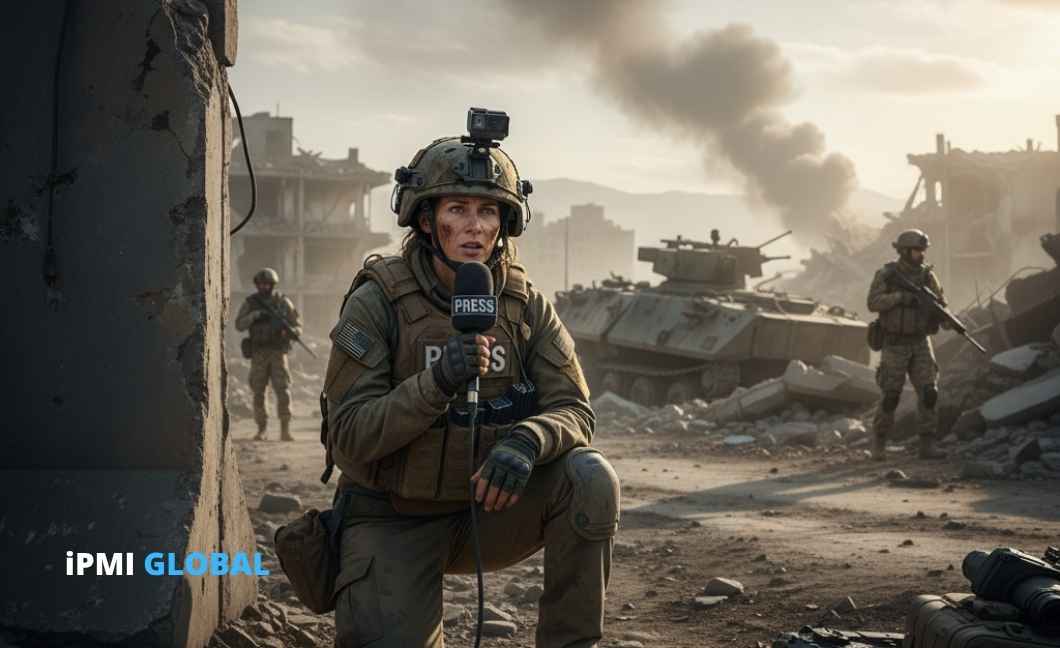
In this iPMI Global insights article we provide an overview of the critical need for specialized high-risk insurance for professionals like journalists, NGO staff, and aid workers operating in volatile global environments. It explains that standard insurance policies are insufficient because they typically exclude coverage for major threats such as acts of war, terrorism, and political unrest. The text details several essential coverages provided by high-risk policies, including Kidnap and Ransom (K&R), political and security evacuation, and trauma counseling for conditions like Post-Traumatic Stress Disorder (PTSD). Furthermore, the source lists several specialty providers that offer these crucial plans and emphasizes that securing this insurance is a fundamental aspect of an organization's duty of care to its personnel.
1.0 Introduction: The Inadequacy of Standard Insurance in Volatile Environments
Organizations deploying personnel—such as journalists, NGO staff, and aid workers—into volatile operational theatres face a specific and critical set of risks not covered by standard corporate insurance policies. The purpose of this document is to analyse these acute coverage gaps and articulate the resulting organizational liabilities.
The scope of this assessment is focused on the unique exposures encountered by personnel operating in conflict zones, disaster areas, and regions of political instability. Standard insurance frameworks are fundamentally unsuited for these contexts, creating significant vulnerabilities for both the individual in the field and the organization they represent. This assessment proceeds by first identifying the explicit policy exclusions that create these catastrophic vulnerabilities.
2.0 Identification of Critical Vulnerabilities: Standard Policy Exclusions
A thorough understanding of specific policy exclusions is the most critical component of the risk identification process. Standard travel and corporate insurance products are fundamentally misaligned with the realities of operating in hostile environments, as their core design assumes a baseline level of stability and security that is absent in high-risk zones. This misalignment is not a minor detail but a foundational flaw that renders such policies ineffective when needed most.
The primary coverage gap, and the most significant vulnerability, is the explicit exclusion of incidents arising from acts of war, terrorism, and political unrest. For personnel operating in volatile theatres, these are not improbable edge cases but central, daily threats. By excluding the very dangers these professionals are most likely to encounter, standard insurance becomes catastrophically inadequate, leaving individuals and their organizations dangerously exposed to physical, psychological, and financial harm. Consequently, mitigating this exposure requires a fundamentally different class of insurance products, the components of which are analysed in the subsequent section.
3.0 Analysis of Essential High-Risk Insurance Components
Specialized, high-risk insurance is not an optional add-on but a non-negotiable component of a comprehensive safety and duty-of-care strategy. It is the primary tool for mitigating the catastrophic coverage gaps left by standard policies. This section deconstructs the essential coverages required to build a resilient safety net for personnel operating in high-risk environments.
This policy component directly mitigates the dual financial and operational risks associated with a kidnapping event. Beyond providing financial indemnification for a potential ransom, K&R policies grant the organization immediate access to expert negotiators and crisis response professionals. This expert support is the critical asset in managing a crisis, ensuring the safest possible outcome and mitigating the organization's operational and reputational exposure.
3.2 Political and Security Evacuation
This coverage mitigates the risk of personnel being trapped by sudden-onset crises, such as escalating political instability, civil unrest, or a major natural disaster. It is designed to cover the prohibitive logistical and security costs associated with extracting individuals from a deteriorating environment to a point of safety, an operation far beyond the scope of standard travel assistance programs.
3.3 Emergency Medical and Repatriation
This coverage mitigates the acute risk of severe injury or illness in locations with inadequate medical infrastructure. It specifically covers the costs of emergency medical evacuation to a facility capable of providing appropriate care. Furthermore, it ensures the individual can be repatriated to their home country, guaranteeing a continuum of care and mitigating the long-tail financial liability of a medical incident abroad.
This provision is the most fundamental requirement for mitigating risk in a conflict zone. By explicitly including incidents arising from acts of war, civil war, and terrorism, this coverage directly closes the primary exclusion gap found in all standard insurance policies. It is the cornerstone of any viable insurance program for high-risk theatres.
3.5 Personal Accident
This coverage mitigates the financial impact of a catastrophic personal incident by delivering a lump-sum payment for accidental death, injury, or disablement. This is particularly vital for mitigating the organization's liability and meeting its duty of care for freelance professionals who lack access to employer-sponsored benefits, ensuring they or their families have a financial backstop.
3.6 Post-Traumatic Stress Disorder (PTSD) Counselling
This component mitigates the significant risk of long-term psychological injury inherent in high-risk work. Policies that include coverage for professional PTSD counselling provide a necessary mechanism for post-incident care. This provision addresses the foreseeable psychological toll of traumatic events and is an essential element of a modern duty-of-care framework.
Having defined the necessary coverage components, the analysis now turns to the legal and ethical imperatives that mandate their implementation.
4.0 Organizational Liability and Duty of Care Obligations
Providing comprehensive, specialized insurance is a cornerstone of an organization's legal and ethical "duty of care," which mandates that all reasonable steps be taken to ensure the health, safety, and well-being of personnel. Failure to secure insurance appropriate for the operating environment exposes the organization to significant and multifaceted risk.
The organizational risk is twofold. First is direct financial and legal liability. An uncovered kidnapping event, a direct consequence of the K&R exclusion in standard policies, would expose the organization to unbudgeted crisis response costs, ransom demands, and severe litigation risk. Second, and equally damaging, is the failure in the duty of care itself. This failure creates significant non-financial exposure, including reputational risk and a collapse in personnel morale. A robust insurance program is therefore essential for protecting the organization, its mission, and its most valuable asset—its people—while enabling them to focus on their work with the confidence that they are protected.
5.0 Mitigation Pathways: Specialist Insurance Providers
Procurement of appropriate coverage requires engaging with a niche market of specialist underwriters. The following providers, identified through market analysis, represent key players in this sector capable of closing the identified vulnerabilities.
|
Provider |
Specialization/Focus |
|
Provides Compass Shield, a pioneering membership service designed to close the critical gap between traditional insurance cover and real-world risk management. |
|
|
Clements Worldwide |
Specializes in international aid and NGO insurance since 1947. |
|
Bellwood Prestbury |
Known for expertise in humanitarian insurance for hostile or remote locations. |
|
High Risk Voyager Travel Insurance |
Offers flexible policies for media and aid workers in war and crisis zones. |
|
Insurance for Journalists (IFJ partner) |
A scheme developed for media professionals, including freelancers, offering worldwide coverage. |
|
Miller Insurance |
Features a dedicated facility for NGOs and IGOs, covering accidental death, injury, and medical expenses. |
Engaging with these or comparable specialist providers is the primary mitigation strategy for closing the critical insurance gaps identified in this assessment.
6.0 Conclusion: The Strategic Imperative of Comprehensive Coverage
iPMI Analyst Christopher Knight concludes, “This assessment culminates in a clear strategic conclusion: the gap between standard insurance and operational reality in high-risk zones constitutes a critical failure of an organization's duty of care, exposing it to catastrophic financial and legal liabilities. Mitigating this risk requires a purpose-built insurance program that includes essential coverages such as Kidnap and Ransom, Political and Security Evacuation, and explicit War and Terrorism cover. Fulfilling legal and ethical obligations compels organizations to secure this level of protection, shielding them from liability while affirming a commitment to the safety of their people.
For professionals working to bring truth and relief to the world's most vulnerable populations, the right insurance is more than just a policy. It is a fundamental tool that protects lives, careers, and the integrity of their vital work.”




