

What are the Key Differences Between Public and Private Healthcare In LATAM?
- Written by: iPMI Global
In this iPMI Global Regional Insights article we explore the key differences between public and private healthcare in Latin America. We read the recent iPMI Global Round Table, iPMI Global LATAM iPMI, Assistance and Cost Containment Strategies and delve into key differences between public and private healthcare in Latin America.
Funding and Financing
Public Healthcare in Latin America is often funded through government budgets, taxes, and contributions from employers and employees. These systems aim to provide healthcare services to all citizens, including those who cannot afford private insurance. Public healthcare is generally subsidized or provided at low cost to patients.
Private Healthcare in Latin America is funded through private insurance premiums, out-of-pocket payments, and employer-provided health plans. Individuals and families opt for private healthcare to access better quality care, shorter waiting times, and more personalized services. Private healthcare services can be expensive, especially for specialized treatments.
Service Delivery and Access
Public Healthcare services in Latin America vary widely in quality and availability. It often suffers from underfunding, overcrowding, and long wait times, leading to an increased reliance on private insurance. Access to specialized medical care and reach in rural areas can be limited.
Private Healthcare facilities generally offer better access to specialized medical care, modern equipment, and shorter waiting times for consultations and procedures.... It provides faster access to care.
Quality of Care
The quality of care in public healthcare systems can vary significantly. Public healthcare often suffers from inefficiencies.
Private healthcare providers in Latin America often offer higher standards of care, with modern facilities, advanced technology, and specialized medical expertise.... Patients typically experience more personalized attention and amenities in private hospitals and clinics.
Cost and Affordability
Public Healthcare services are generally provided at low cost to patients, aiming to ensure accessibility for low-income populations. However, out-of-pocket expenses for medications, diagnostic tests, and certain procedures may still be required.
Private Healthcare services in Latin America can be expensive, especially for specialized treatments, elective procedures, and consultations with top specialists. Costs are typically covered by private insurance plans or paid out of pocket by individuals who can afford them.
Coverage and Scope
Public Healthcare systems in Latin America aim to provide universal coverage, ensuring basic healthcare services for all citizens.
Private Healthcare coverage in Latin America varies based on insurance plans and individual preferences.
Role of Government
Governments in Latin America play a central role in overseeing and regulating public healthcare systems, setting healthcare policies, and allocating funding.
Private healthcare operates under regulatory frameworks set by governments, but the sector is largely driven by market forces, competition among providers, and consumer demand.
Conclusion
iPMI Global analyst Christopher Knight summarises, “In summary, public healthcare in LATAM aims for universal access but often struggles with funding and quality, leading to long wait times, while private healthcare offers higher quality and faster access but is primarily available to those who can afford it through insurance or direct payment. Private insurance helps bridge the gap by providing access to premium care for the middle and upper classes. Notably, public health systems and products generally do not offer the mobility to seek help outside the country of residence, a key feature of private healthcare.”
iPMI Global LATAM iPMI, Assistance and Cost Containment Strategies Round Table
Round Table Executives
- Elisa Otero Fernandez, AP Companies.
- Stephen Samataro, AXA Partners US.
- Sheldon Kenton, Best Doctors Insurance.
- Victor Navarro, Global Excel.
- Scott Rosen, MDabroad.
- Gitte Bach, New Frontier Group.
- Dr Mike Rizo, Pharmcare Services.
- David Capote, Trawick International.
- Lourdes Peters, World of America.
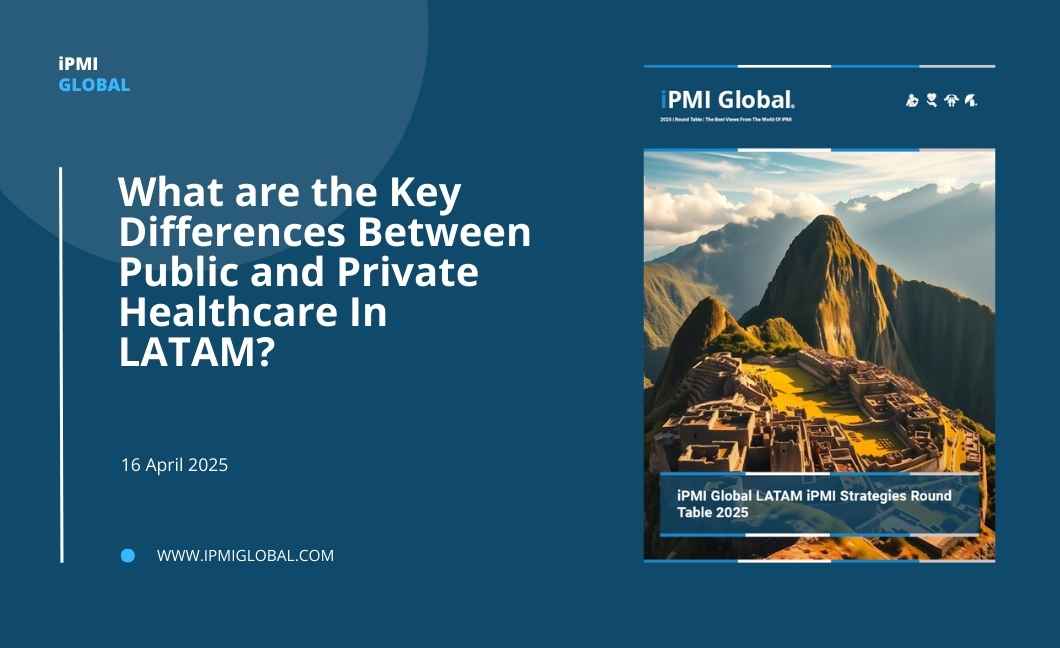
ON THE FRONT COVER: One of the most famous landmarks in Latin America is the ancient site of Machu Picchu in Peru. This World Heritage Site is an impressive Incan citadel nestled at the high altitude of 2,430 meters and set amongst the postcard-perfect Andes Mountains.
"The Latin American insurance and assistance market presents a dynamic and promising landscape with significant growth potential. However, success requires a deep understanding of the regional nuances, effective management of complex regulatory frameworks, strong operational capabilities, and an unwavering focus on providing accessible and affordable solutions to diverse populations. Companies that embrace innovation, leverage technology, and build strong partnerships will be best positioned to capitalize on the opportunities and drive positive change in the region." Christopher Knight, CEO, iPMI Global.
Download iPMI Global LATAM iPMI Strategies Round Table 2025
For the best reader experience we recommend downloading the PDF and viewing in Adobe Acrobat.
We hope you enjoy reading this RT report, as much as we enjoyed pulling it together.

